Reflections on Building, Learning, and Moving Forward
As the year comes to a close, I find myself looking back with gratitude, perspective, and a deep sense of responsibility.
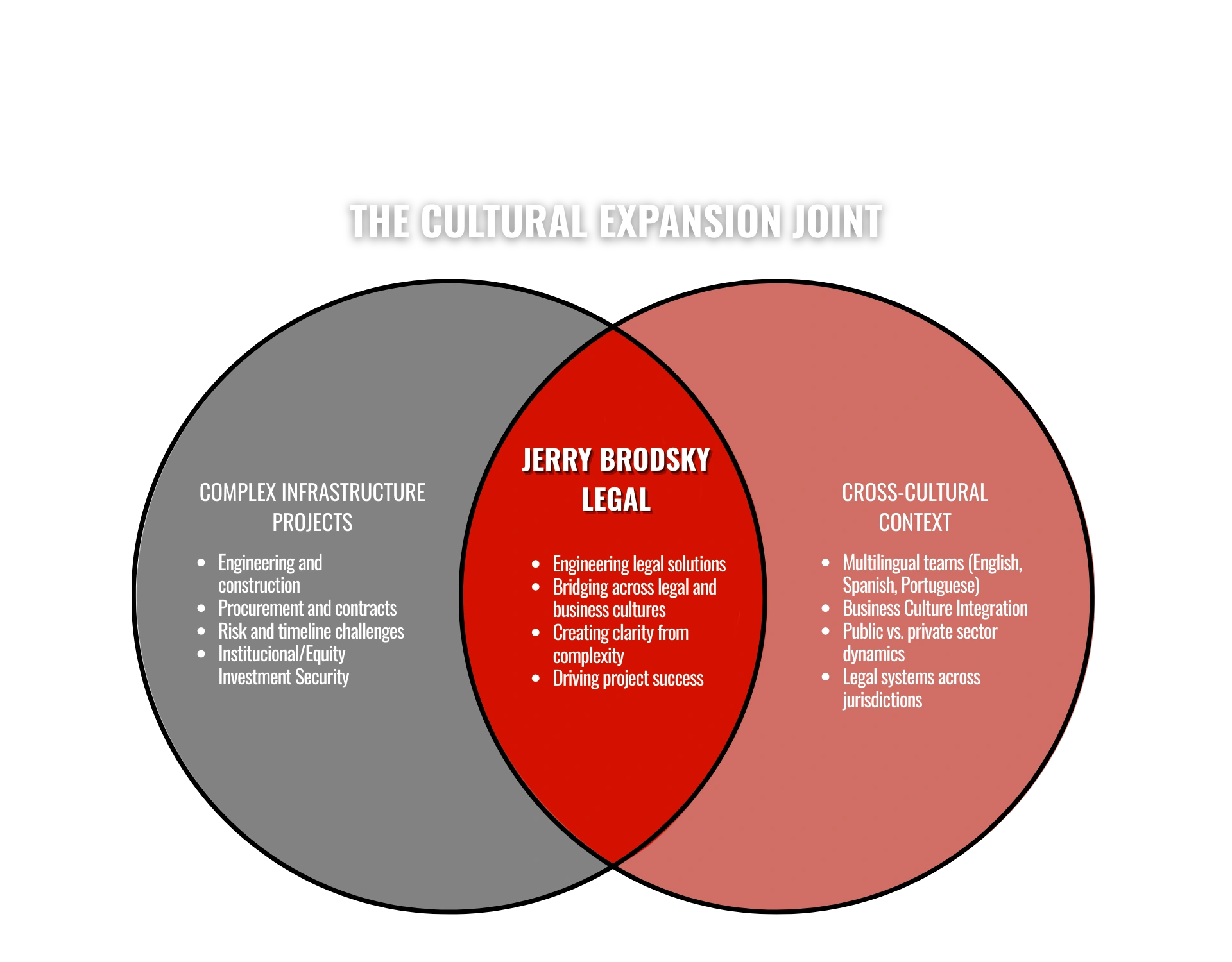
This year was not just another cycle of projects, events, and writing. It marked the beginning of a new chapter. The launch of Jerry Brodsky Legal was both a professional milestone and a personal commitment: to approach construction and infrastructure law not only as a legal practice, but as a system designed to help projects succeed and communities benefit.
Throughout the year, this blog became a space to reflect, to connect ideas, and to share lessons shaped by decades of work across borders, cultures, and legal systems. The writing was never meant to exist in isolation. Each piece built on the last, forming a broader conversation about how we build, how we collaborate, and how we lead in increasingly complex environments.
We began the year by reflecting on a simple but powerful idea: international tools and frameworks only work when they are thoughtfully adapted to local legal, cultural, and institutional realities. That perspective shaped everything that followed, from applying structured, engineering-based thinking to legal practice, to viewing infrastructure as a coordinated effort that depends on leadership rather than blame. It also reaffirmed a principle that runs through all of our work: the real client is not a party or a contract, but the project itself.
As the year progressed, certain themes consistently resurfaced in both writing and practice. Trust emerged as a form of project capital, transparency as a prerequisite for sustainable infrastructure, and collaboration as a more effective way to manage risk than confrontation. We also explored how technology is beginning to reshape this landscape. Artificial intelligence in construction disputes is no longer theoretical. It is already helping teams see issues earlier and understand them more clearly, while reinforcing an essential truth: judgment, leadership, and responsibility remain firmly human.
The year was also defined by presence and dialogue. From conferences and panels across Latin America to industry gatherings in the United States, including the Construction Super Conference, the conversations were remarkably consistent. Different countries, different markets, but the same underlying challenges: how to deliver complex projects under pressure, how to prevent disputes before they escalate, and how to operate within systems that demand clarity, discipline, and trust.
A recurring theme in those conversations was the growing movement north. Companies and investors from Latin America are looking to the United States not only for opportunity, but for predictability and long-term value. That journey requires preparation, humility, and guidance. It reinforced something I have seen time and again: success across borders is less about exporting models and more about understanding systems.
Perhaps the most important lesson of the year is not technical. Projects rarely fail because of engineering limitations alone. More often, they fail because of delayed decisions, unclear responsibilities, misaligned expectations, and breakdowns in communication. Conversely, projects succeed when people are aligned around a shared goal, when systems are designed to support collaboration, and when leadership prioritizes clarity over noise.
I am deeply grateful for the trust placed in me this year. For clients who allowed me to walk alongside them on complex projects. For colleagues who challenged ideas, shared experience, and enriched the conversation. For the opportunity to teach, to learn, and to contribute to an industry that quite literally shapes how societies live and grow.
As we move into the coming year, the commitment remains the same: to continue building legal frameworks that support project success, to keep bridging systems, cultures, and disciplines, and to approach every engagement with the understanding that what we do matters not only to contracts and balance sheets, but to the communities that depend on infrastructure delivered well.
Thank you for being part of this journey. I look forward to continuing the work together in the year ahead.