For years, Venezuela remained largely outside the conversation for U.S. contractors, engineers, developers, and infrastructure investors. Political uncertainty, sanctions, deteriorating public assets, and economic instability made the market difficult to navigate, even for companies accustomed to working internationally.
That conversation has changed.
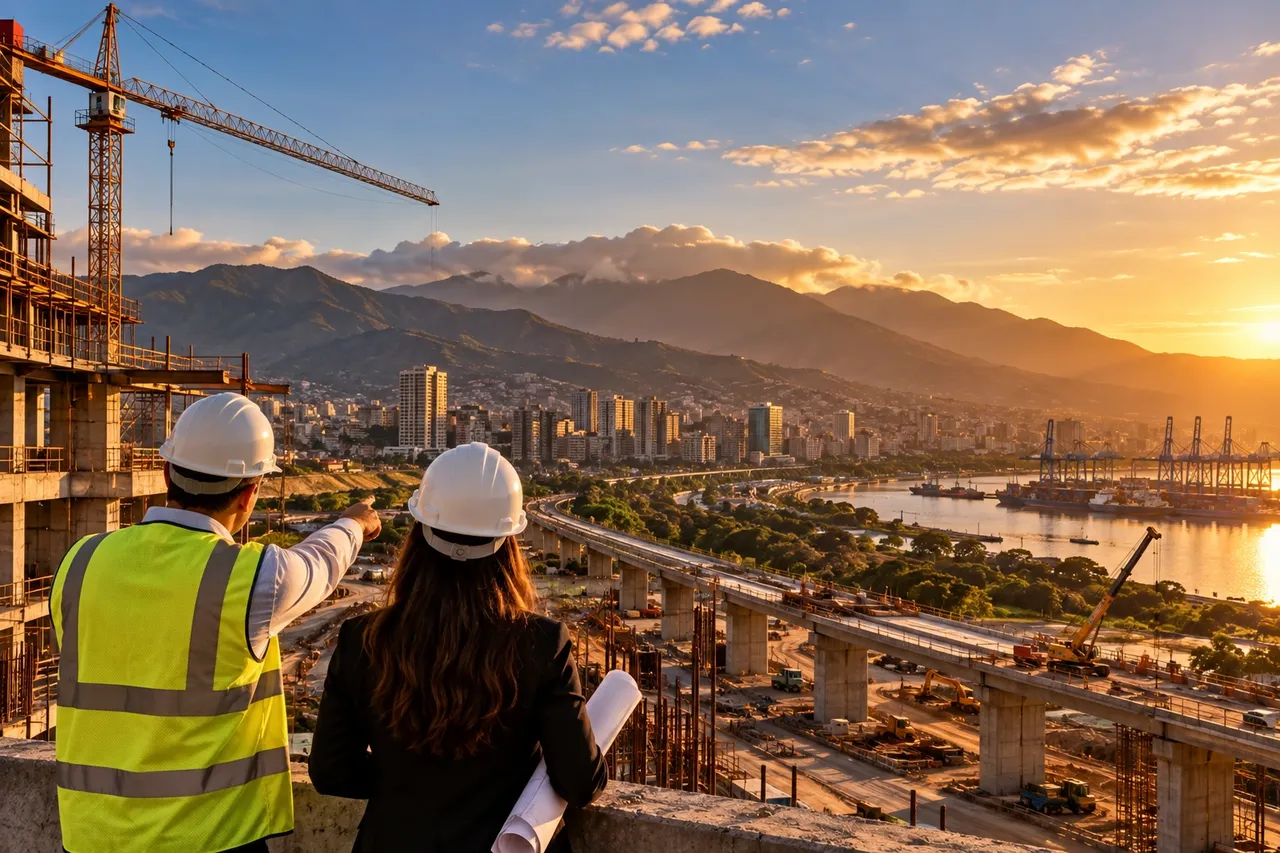
Venezuela is opening parts of its economy to greater private participation at the same time the country faces a major reconstruction challenge resulting from both tragic natural disasters and years of manmade damage and neglect. Following the June earthquakes, direct physical damage was estimated at approximately $37 billion, including roughly $13 billion in infrastructure. Telecommunications, energy, transportation, water systems, ports, and other critical assets will require substantial investment.
And those figures relate to earthquake damage alone. The cost of rebuilding infrastructure affected by years of damage and neglect is far greater.
For U.S. contractors, engineers, developers, and investors, the opportunities could be significant, particularly if statements from U.S. authorities indicating that opportunities for U.S. companies will be prioritized prove accurate.
Significant opportunities come with significant risks.
The Opportunity Is Moving Faster Than the Legal Certainty
Venezuela needs capital—both financial and human—quickly. Investors, contractors, developers, and others ready to participate, however, need something different: clear rules, predictable contracts, dependable payment structures, and confidence that the legal framework supporting a project will remain in place.
That tension matters.
Companies entering the market may have to navigate Venezuelan law, U.S. sanctions and regulatory requirements, international financing, foreign subcontractors, currency risk, political change, and dispute-resolution provisions involving multiple jurisdictions.
A project can be commercially attractive and still be poorly structured.
That is where problems begin.
The Contract Has to Be Built for the Market
Before companies focus on mobilization and construction, they need to understand how the project will function when circumstances change.
Who bears the risk if approvals are delayed? What happens if regulations or sanctions change? How are currency fluctuations handled? Which law governs the contract? Where will disputes be resolved? And, most importantly, how can disagreements be addressed without stopping the project?
Those questions are not secondary legal details. They are fundamental project-management issues.
The knowledge and guidance of experienced local Venezuelan counsel will be essential. But local counsel alone, as is often the case throughout Latin America, may not address the full picture. Major infrastructure projects will likely involve U.S. and other foreign investors, international lenders, multinational contractors, insurers, imported equipment, and international dispute-resolution mechanisms.
That requires both strong local knowledge and a cross-border legal strategy.
The Best Time to Prevent a Dispute Is Before the Project Starts
Too often, companies begin thinking seriously about dispute resolution only after a disagreement appears.
By then, governing law has already been selected, risk has already been allocated, notice requirements are already in place, and critical project documentation may already be incomplete.
The better approach is to build dispute prevention into the project from the beginning through clear risk allocation, practical notice and documentation procedures, communication protocols, escalation mechanisms, dispute boards, mediation, arbitration, or other tools appropriate to the project.
The goal is not simply to prepare for a dispute.
It is to keep the project moving without one.
Experience Matters in Markets Like Venezuela
This is where experience with complex international projects becomes particularly important.
The call for Venezuela’s reconstruction has been made and heard.
For decades, I have advised owners, developers, contractors, insurers, sureties, and investors on major construction and infrastructure projects throughout Latin America. Much of that work has involved exactly the kinds of issues companies considering Venezuela will now face: cross-border contracts, changing regulatory environments, project risk, claims, dispute boards, and international dispute resolution.
Venezuela may offer significant opportunity, but entering quickly should never be more important than entering prepared.
The companies that succeed will not simply be those with the strongest engineering teams or the largest balance sheets. They will be the ones that understand the risks before signing contracts and put systems in place to manage them before construction begins.
Because the most successful disputes are still the ones that never happen.