
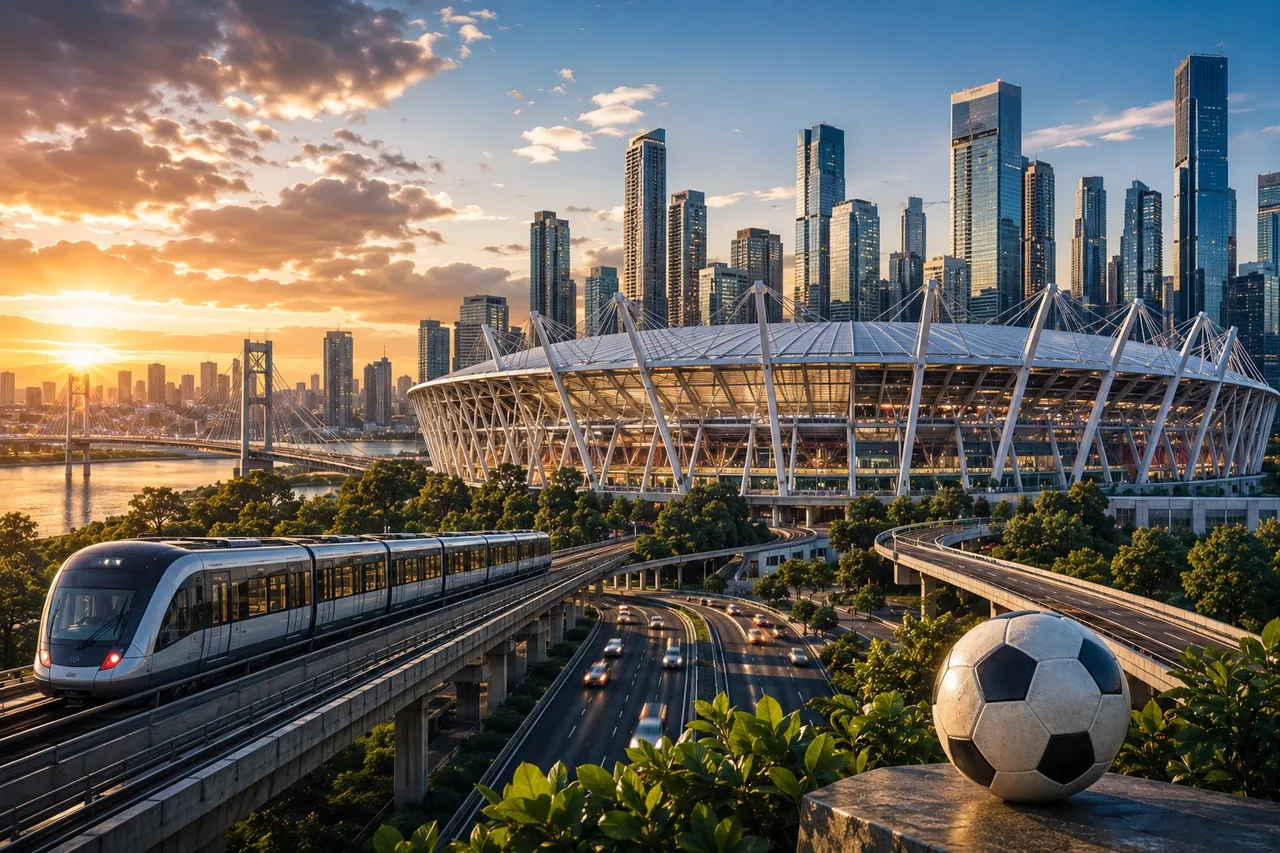
As the final whistle is set to blow on the 2026 FIFA World Cup, headlines will celebrate the champion, unforgettable moments, and record-breaking attendance. But beyond the excitement of the tournament lies another success story—one that offers valuable lessons for planners, governments, developers, engineers, and infrastructure professionals.
This World Cup demonstrated that the future of mega-events is not about building more. It is about building smarter.
For decades, hosting the World Cup has often meant billions invested in new stadiums and infrastructure, much of which later became underutilized “white elephants” or, worse, abandoned eyesores. The 2026 tournament showed a different approach. Hosted jointly by Canada, Mexico, and the United States, it relied primarily on existing stadiums while investments focused on strategic upgrades, technology, accessibility, transportation, security, temporary facilities, and operational improvements.
That distinction is important.
The lesson is not that countries should avoid building new infrastructure. New projects remain essential for economic development and regional growth. Rather, infrastructure investments should be guided by long-term value, ensuring they continue to benefit communities long after the final match has been played.
Smart infrastructure means finding the right balance: maximizing existing assets while building new infrastructure only where it will create a lasting social and economic legacy.
The tournament also demonstrated that three countries with different legal systems, institutions, and operational frameworks can successfully collaborate to deliver one of the world’s most complex global events. That level of coordination required strategic planning, effective governance, legal alignment, and a shared commitment to execution.
As governments and industry leaders plan the next generation of mega-projects, the question should not simply be, What should we build? It should be, What legacy will this investment leave?
The 2026 FIFA World Cup reminds us that the most successful infrastructure projects are not necessarily those that build the most; they are the ones that create the greatest long-term value. That, perhaps, is the true definition of smart infrastructure.
It also reminds us that coordination, strategic planning, effective governance, legal alignment, and a shared commitment to execution are the foundations of successful infrastructure delivery.
Just as in complex construction and infrastructure projects, success is measured not only by what is built, but by the value it continues to create for generations to come.
Sí se puede!